

Landulph Orchard Green
Counting the Trees in Spring 2026
Over 350 trees have been planted by volunteers in Landulph Orchard Green over the last 2 years. In spring 2026, we examined and catalogued all the trees.
Duke Orchard Trees
Of the 60 container grown fruit trees planted in Duke Orchard in spring 2024, most produced blossom and fruit last year and only two have died. These trees are local varieties of apple, pear, plum, damson, cherry and cobnuts. In spring 2026 we removed the deer guards from these trees to make it easier to reach the fruit and allow space for the tree to grow. In Duke Orchard we have since planted crab apples around the entrance arch, a memorial tree for John and Leslie Hall and a willow dome. The fruit trees are numbered and we have produced a map and index showing the varieties.
Map of the trees in Duke Orchard - June 2026 (pdf)
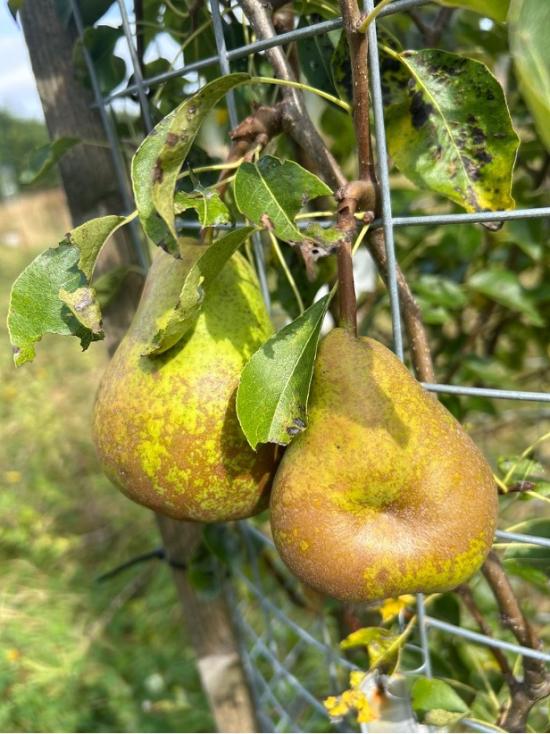
Pears in Duke Orchard in August 2025
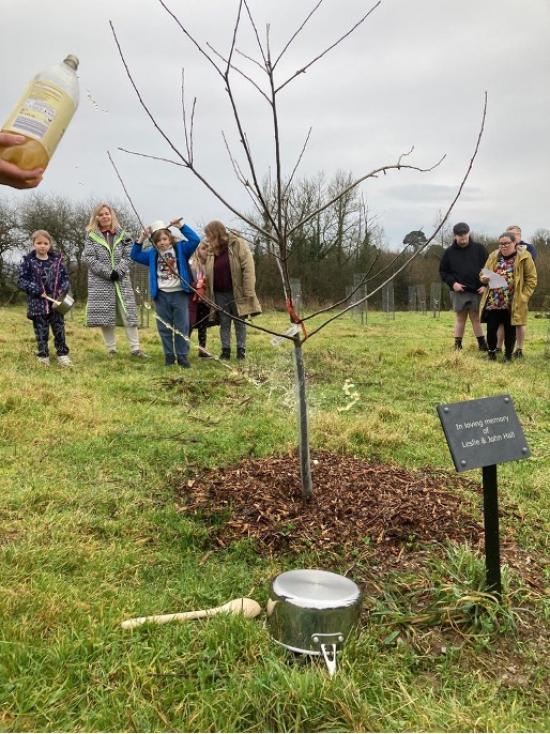
Cornish Gillyflower planted in memory of John and Leslie Hall being Wassailed in Duke Orchard in January 2026
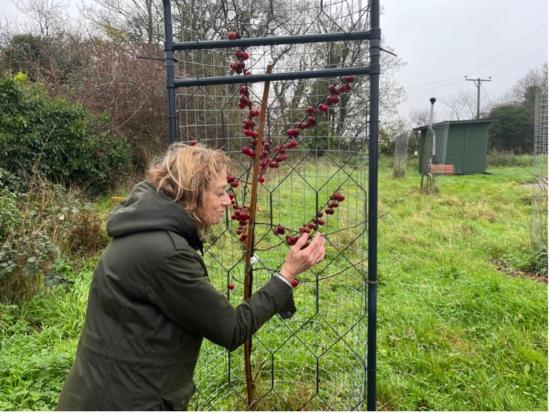
Tree warden monitoring the trees in November 2025
Duchess Green Trees
A year later in spring 2025, in a very muddy Duchess Green, a willow arch and 30 fruit trees were planted with some help from Glyn Deacon and his digger. As well as local varieties of apples and cherries, these included rather more unusual (but still locally grown) fruit trees including almonds, a medlar, greengage, fig and drooping plums. Of these, two have died this year two donated ornamental cherries were planted. It will be interesting to see how much fruit these trees produce (the medlar and almond fruited last year) and which attract the most wildlife.
Map of the trees in Duchess Green - June 2026 (pdf)
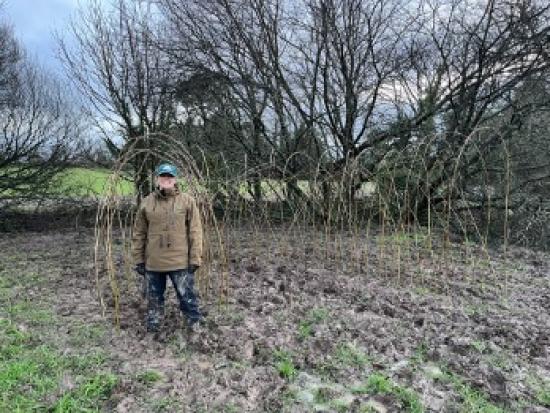
Planting the willow arch in Duchess Green in January 2025
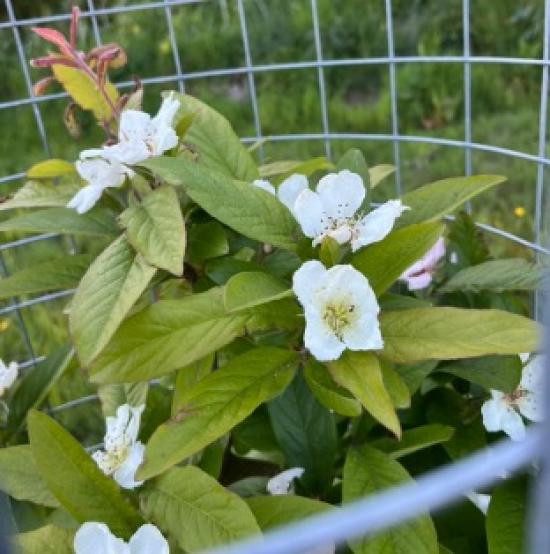
Medlar in blossom in Duchess Green in April 2026
Miyawaki Forest in Duchess Green
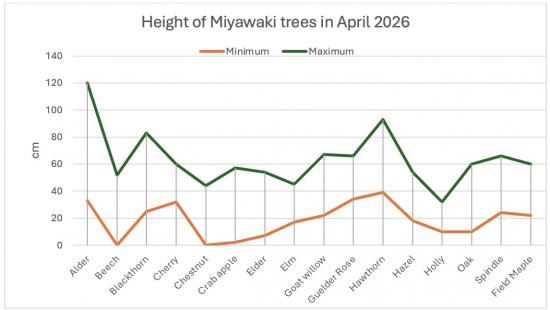
The Miyawaki forest was designed by Landulph School and 256 small whips with a plug of soil were planted in November 2024 in 70 one metre squares with three to five trees per square. In urban settings, the dense planting is reported to create a thriving woodland much more quickly than conventional planting – we are interested to see whether this is true in a Cornish field. So far, only 15 trees have died and over 50 have at least doubled in height despite enduring a long dry spell last summer and a very wet spring. We planted 16 locally grown native varieties; so far the alder and hawthorn are doing the best – none have died and the largest alder has grown from about 30cm to 120cm. The elder and holly are both growing much more slowly and 5 of the goat willow have died.
Map of the trees in the Miyawaki Forest - April 2026 (pdf)
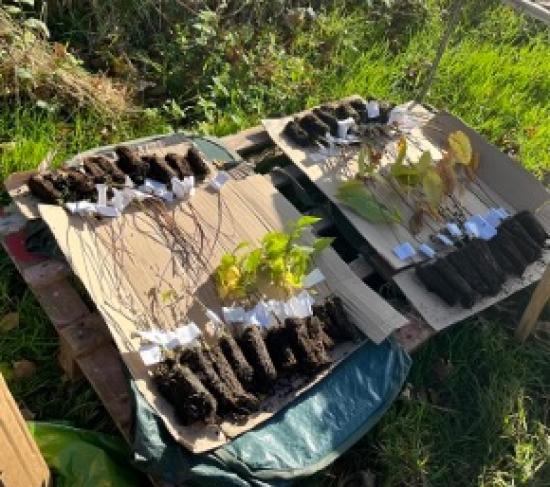
Whips ready for planting in Miyawaki in November 2024
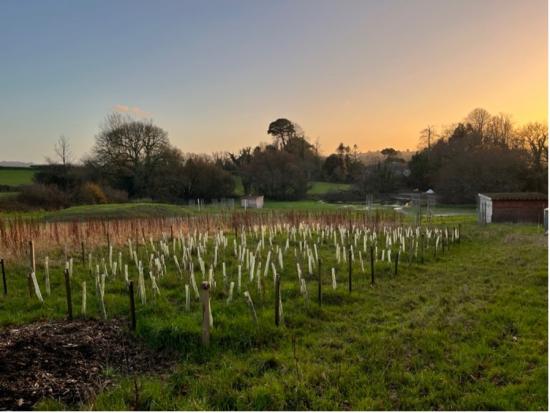
Miyawaki in December 2025
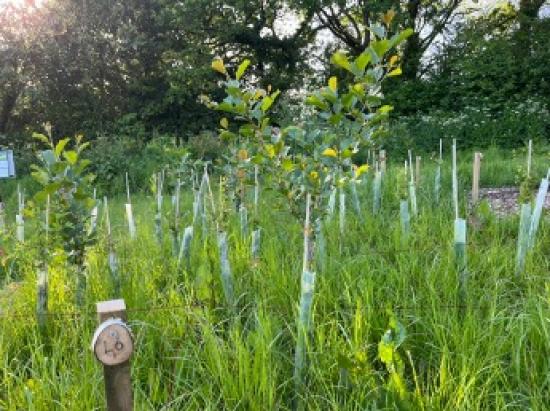
Largest alder in Miyawaki in April 2026
Analysis of Miyawaki Forest - April 2026 (pdf)
Thank you to everyone who has helped with planting, weeding, mulching, watering and wassailing. With continued support, these trees will grow into a lasting asset for the parish and a legacy for future generations.
© Clare Tagg, June 2026, All rights reserved.
This article is protected by copyright - please contact editor@landulph.org.uk if you want to use it.
Landulph Orchard Green
Visitors
- Sketching Summer - 1 August 2026
- Visit by Landulph School - 3 July 2026
- "Bless this space" - 28 November 2025
- Celebrating Duchess Green with Barrett's Privateers - 31 August 2025
- Landulph School Visit - 26 June 2025
- Visitors to Landulph Orchard Green
- Duchess Green Picnic - 27 April 2025